Showing posts with label Non stormwater discharge. Show all posts

Saturday, February 24, 2018

Does Oil Sheen On Pond Need To Be Reported? What Is Sheen Rule?

Under the Clean Water Act, the "sheen rule" provides the framework for determining whether an oil spill should be reported to the federal government. Federal regulation requires the person in charge of a facility or vessel responsible for discharging oil that may be "harmful to the public health or welfare" to report the spill. The regulation establishes the criteria for determining whether an oil spill may be harmful to public health or welfare, thereby triggering the reporting requirements:
  • · Discharges that cause a sheen or discoloration on the surface of a body of water;
  • · Discharges that violate applicable water quality standards; and
  • · Discharges that cause a sludge or emulsion to be deposited beneath the surface of the water or on adjoining shorelines.
These reporting criteria are independent of local or State spill reporting requirements. Therefore, spills might be reportable even if State spill reporting thresholds are not exceeded.


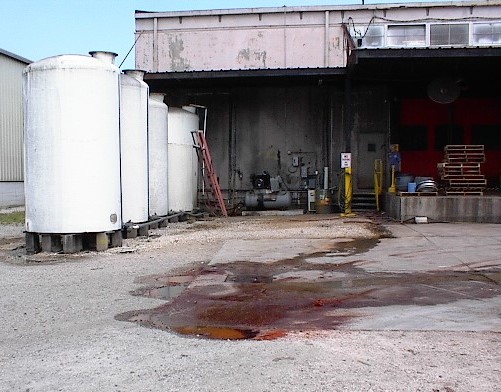
  Hazardous Chemical Spill to Sewer Outside Manufacturing Plant
Hazardous Chemical Spill to Sewer Outside Manufacturing Plant 

Because the Oil Pollution Act of 1990, which amended the Clean Water Act, broadly defines the term "oil," the sheen rule applies to both petroleum and non-petroleum oils and fats (e.g., vegetable oil, milk). The regulation also provides several exemptions from the notification requirements.

 Need more information of federal, State or local spill reporting requirements? Contact Caltha at info@calthacompany.com

   
Caltha LLP | Your EH&S Compliance, 
Auditing and EMS/SMS Partner

Sunday, December 15, 2013

Response To Notice Of Violation For Industrial Stormwater Discharges and Non-Storm Water Discharge

Caltha LLP Project Summary

Project: Response To MPCA NOV For Industrial Stormwater Discharges and Non-Storm Water Discharge
Client: Transportation Sector
Location(s): Minnesota

Key Elements: Compliance with No Exposure Certification, Compliance with prohibition of unauthorized non storm water discharge

Overview: In a routine compliance inspection of industrial sites which had submitted no exposure certifications (NEC) being conducted by the State, this facility was found to be in non-compliance with both the conditions of the NEC and was also found to be discharging wash water without a permit. The facility was placed in enforcement action to resolve these issues. Caltha LLP was retained by the facility to assist them in evaluating requirements to meet the NEC and to identify options for addressing unpermitted discharge. Working with facility management, it was determined that costs for necessary corrective actions to comply with the NEC were too high compared to costs to obtain and comply with an industrial stormwater discharge permit. The facility terminated its NEC and applied for permit coverage. Caltha assisted the facility in preparing a facility SWPPP using our Minnesota SWPPP template and a permit compliance plan. Alternate off-site facilities were found to eliminate the discharge of unauthorized wastewater releases from the facility.

For more information on Caltha LLP services, go to the Caltha Contact Page

Caltha LLP provides expert consulting services to public and private sector clients nationwide to address Stormwater Permitting & Regulatory Support, Stormwater Pollution Prevention Plans (SWPPP), Stormwater Monitoring and Stormwater Training.

For further information contact Caltha LLP at
info@calthacompany.com or Caltha LLP Website

Thursday, May 24, 2012

Stormwater Best Management Practices For Marinas

U.S. Environmental Protection Agency Region 2 is recommending that New York State marinas take steps to prevent the pollution of local waterways, including best environmental practices for reducing pollution from boat washing and other maintenance activities that can degrade water quality. These practices are included in a manual created by the EPA with assistance from the New York State Department of Environmental Conservation. It has been provided to over 500 marina operators throughout New York State and provides recommendations on ways marina owners and operators can reduce pollution through more efficient use of materials, energy and land. 
According to EPA and DEC, cleaning products and toxic chemicals used in boat maintenance can pollute waterways when they are washed into the water when it rains. The effect of runoff from a single boat or marina on a water body may seem insignificant, but when multiplied, it can degrade water quality. Because marinas are located at the water’s edge, the water is affected by maintenance practices and pollution that flows into the water from surrounding areas.

Key recommendations for preventing water pollution from boat operations and maintenance:
  • Regularly inspect above-ground fuel storage tanks and associated piping for leaks, and ensure that these tanks have secondary containment areas to contain spills.
  • Store spill containment and control materials in a clearly marked and easily accessible location attached or adjacent to the fuel dock. Keep oil absorbent pads and pillows available at the fuel dock for staff and customers to mop up drips and small spills.
  • Avoid underwater boat bottom cleaning or hull scraping to remove antifouling paint from boat hulls.
  • Make every attempt to collect wash water, treat it and either dispose of it at a sewage treatment plant or recycle it.
  • Perform as much boat repair and maintenance as practicable inside work buildings. Where an inside workspace is not available, perform abrasive blasting and sanding within spray booths or tarp enclosures.
  • Use cleaning products that are less toxic and contain lower concentrations of volatile organic compounds, ozone depleting chemicals and toxic materials. Always clean with water and a coarse cloth first.
  • Permanently seal floor drains in maintenance areas with concrete if they do not connect to a sewer or holding tank. Sweep or vacuum floors often and immediately before floor washing.
  • Use propylene glycol antifreeze (usually pink), which is less toxic than ethylene glycol (usually green) to winterize all systems except “closed” or freshwater cooling systems.
  • Minimize impervious areas on the marina site by paving only where absolutely necessary. Plant a vegetated filter strip or buffer between impervious areas and the marina basin.
Caltha LLP provides expert consulting services to public and private sector clients in New York and nationwide to address Stormwater Permitting & Regulatory Support, Stormwater Pollution Prevention Plans (SWPPP), Stormwater Monitoring and Stormwater Training.
For further information contact Caltha LLP at info@calthacompany.com or Caltha LLP Website

Tuesday, August 9, 2011

Draft Georgia Industrial General Permit Released For Public Comment

The Georgia Environmental Protection Division (EPD) has released a draft Industrial General permit (“2011 IGP”) that will replace the previous general permit (”2006 IGP”) which will expire in August 2011. The draft 2011 IGP is based to a large degree on the US EPA Multi-sector General Permit promulgated in 2008 (“2008 MSGP”). Below are some key changes in the proposed Georgia storm water permit

Current permittees covered under the 2006 IGP will be required to submit a new Notice of Intent (NOI) within 30 days after the effective date of the new permit. New dischargers commencing discharge after the effective date of the 2011 IGP must submit an NOI for coverage 7 days prior to commencing discharge. Also, existing facilities which had previously filed for a “No Exposure Exclusion‟ (NEE) must submit a new NEE form no later than 30 days after the effective date of the 2011 IGP. The 2011 IGP requires facilities that claim they have no storm water discharges associated with industrial activity file a “No Discharge Exclusion” (NDE) form which must be certified by a professional engineer

If a facility failed the benchmark sampling required by the 2006 permit, then the facility may not be authorized to discharge storm water under the proposed permit and may be required to apply for an individual NPDES permit or alternative general permit. The facility has the options to conduct 12 months of flow-weighted composite sampling to demonstrate the discharge does not cause or contribute to an exceedance of water quality standards or make the necessary improvements to the facility to achieve the instream water quality standard as an effluent limit within 18 months

The 2011 IGP stormwater benchmarks are a combination of benchmarks from the 2006 IGP and the 2008 MSGP. The 2011 IGP requires all analytical sampling performed during the term of the previous 2006 IGP be summarized and the summary retained until the end of the next permit term. In the 2011 IGP, all monitoring data not prepared in situ is required to be prepared by a laboratory registered or accredited by the State or by a State certified Laboratory Analyst. If there is an exceedance of a benchmark value, under the 2011 IGP the facility is required to make modifications of best management practices (BMPs) and sample each subsequent quarter until the benchmark is met, or must make a determination that no further pollutant reductions are technologically available and economically practicable.

At least once during the term of the 2011 IGP, a dye or smoke test must be conducted to evaluate for the presence of non-storm water discharges into the storm sewer system, where applicable

The impaired stream segment sampling and requirements of the 2011 IGP apply to all dischargers located within one linear mile of an impaired water. In the 2006 IGP, only those facilities discharging to streams with an approved total maximum daily load (TMDL) had requirements associated with an impaired stream segment. In the 2011 IGP, dischargers to all impaired waters identified in the Georgia 305(b)/303(d) list are required to monitor for appropriate parameters, and corrective action is required if the discharge exceeds the benchmark value, pollutant of concern (POC) listed in the TMDL, as appropriate. Compliance alternatives in the 2011 IGP include a) preventing all exposure, b) documenting that the POC is not present at the site, c) showing that the discharge containing the POC is not likely to cause or contribute to an exceedance of water quality standards, or if the ability of a discharge to cause or contribute to an exceedance of water quality standards is unknown, then d) executing BMPs and evaluating their effectiveness.

Caltha LLP provides expert consulting services to public and private sector clients in Georgia and nationwide to address Stormwater Permitting & Regulatory Support, Stormwater Pollution Prevention Plans (SWPPP), Stormwater Monitoring and Stormwater Training.


For further information contact Caltha LLP atinfo@calthacompany.comorCaltha LLP Website


Tuesday, January 20, 2009

What Are Non Stormwater Discharges and Illicit Discharges?

Stormwater discharge permits include sections discussing the prohibition on non stormwater discharges. Municipal stormwater permits (MS4 permits) also refer to “illicit discharges”; illicit discharges are equivalent to non stormwater discharges. The municipality must develop programs to detect illicit discharges and to eliminate them from being discharged to their system.

Non stormwater discharges are any waste or wastewater discharge through a stormwater outfall that is not stormwater. Non stormwater discharges are not limited to piped discharge of wastewater; discharges could be infrequent or even one-time discharges. Examples of periodic or infrequent discharges include washing of equipment or pavement, blowdown from cooling towers, condensation from chillers or compressors. Non stormwater discharges can be small discharges of water, such as dumping floor scrubber water in a parking lot.

The Clean Water Act does not recognize a “deminimis” discharge – all non stormwater discharge is prohibited, regardless of how small. [Read more about connection between non stormwater discharge prohibition and the Clean Water Act]

The obligation on the discharger under most State stormwater permits is to 1) conduct and document an assessment of potential non stormwater discharges at the permitted facility, and 2) either eliminate the discharge, or to obtain a separate discharge permit that allows the discharge. Permits will also contain a list of allowable non stormwater discharges, which is a small subset of non stormwater discharges that can be discharged without a separate permit, if certain conditions are met.

Caltha LLP assists permitted facilities in conducting non stormwater discharge assessments and determining preferred options for the alternate disposal of non stormwater discharges. Click here to request further information on Stormwater and SWPPP Services.

For further information contact Caltha LLP at
info@calthacompany.com
or
Caltha LLP Website

Monday, January 19, 2009

Non Stormwater Discharge - Illicit Discharge Prohibition – Basis in Clean Water Act

Most stormwater discharge permits included sections discussing the prohibition on non stormwater discharges. Municipal stormwater permits (MS4 permits) also refer to “illicit discharges”; illicit discharges are equivalent to non stormwater discharges. The municipality must develop programs to detect illicit discharges and to eliminate illicit discharges from entering their system.

Stormwater discharge permits address the discharge of stormwater; so why do stormwater permits also address non stormwater discharge? The answer is in the original “Clean Water Act” passed in 1972. One of the most controversial requirements of the Act was a prohibition on all discharges to the waters of the US unless it was covered under a National Pollution Discharge Elimination Systems (NPDES) permit (the NPDES program was also developed under the Act), or was otherwise specifically allowed. This prohibition was so controversial that Congress had to override a veto of President Richard Nixon to pass the Clean Water Act with this requirement.

Unlike other environmental acts, such as RCRA or Clean Air Act, the Clean Water Act does not recognize a “deminimis” discharge. Any discharge to the Waters of the US must be specifically permitted, no matter how small.

Therefore, the prohibition of “non stormwater discharge” simply reinforces a requirement stemming directly from the Clean Water Act. However, in order to allow certain low risk discharges, stormwater discharge permits will also typically list specific “allowable non stormwater discharges”, again to comply with the intent of the Act. Without being specifically allowed, these types of discharges would also be prohibited without an NPDES permit.

Caltha LLP assists facilities in addressing their requirements under State and Federal stormwater and wastewater rules. Click here to request further information on Stormwater and SWPPP Services.

For further information contact Caltha LLP at
info@calthacompany.com
or
Caltha LLP Website